DNA Fingerprinting
by JJ Bird
What is DNA fingerprinting
DNA fingerprinting (sometimes referred to as DNA profiling or genetic fingerprinting) is the process of identifying individuals based on genetic similarities and differences by comparing unique and highly variable DNA sequences between two samples. While most human DNA is very similar across all people, certain regions have major differences that are unique to one individual (other than the case of twins). (Chadwick, 2019)
Example
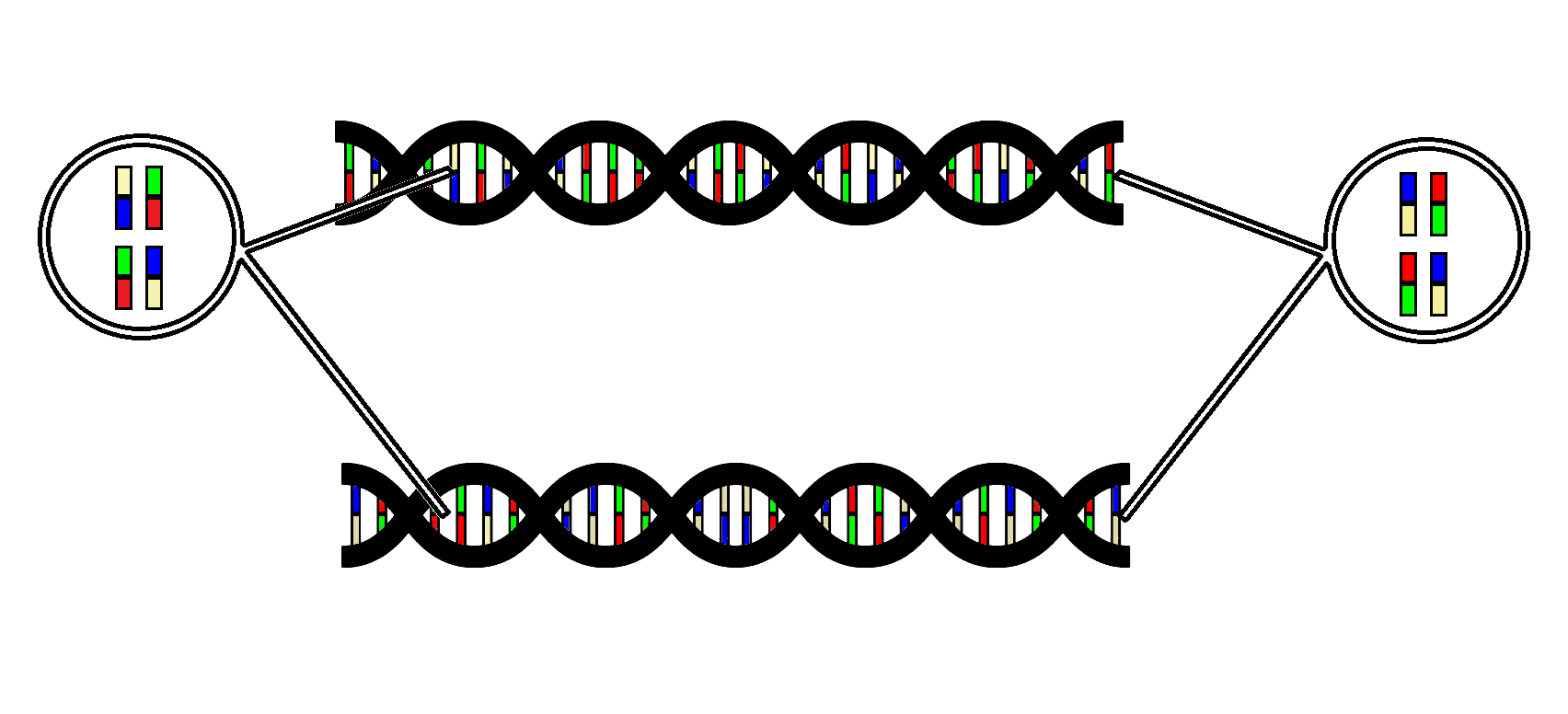
DNA left at a crime scene within a hair strand from the criminal is compared with a suspect's DNA through a spit sample. Highly variable sequences have many genetic differences between the two DNA samples. The suspect is cleared of any guilt. Notice how the two DNA strands have different sequences that code differently.
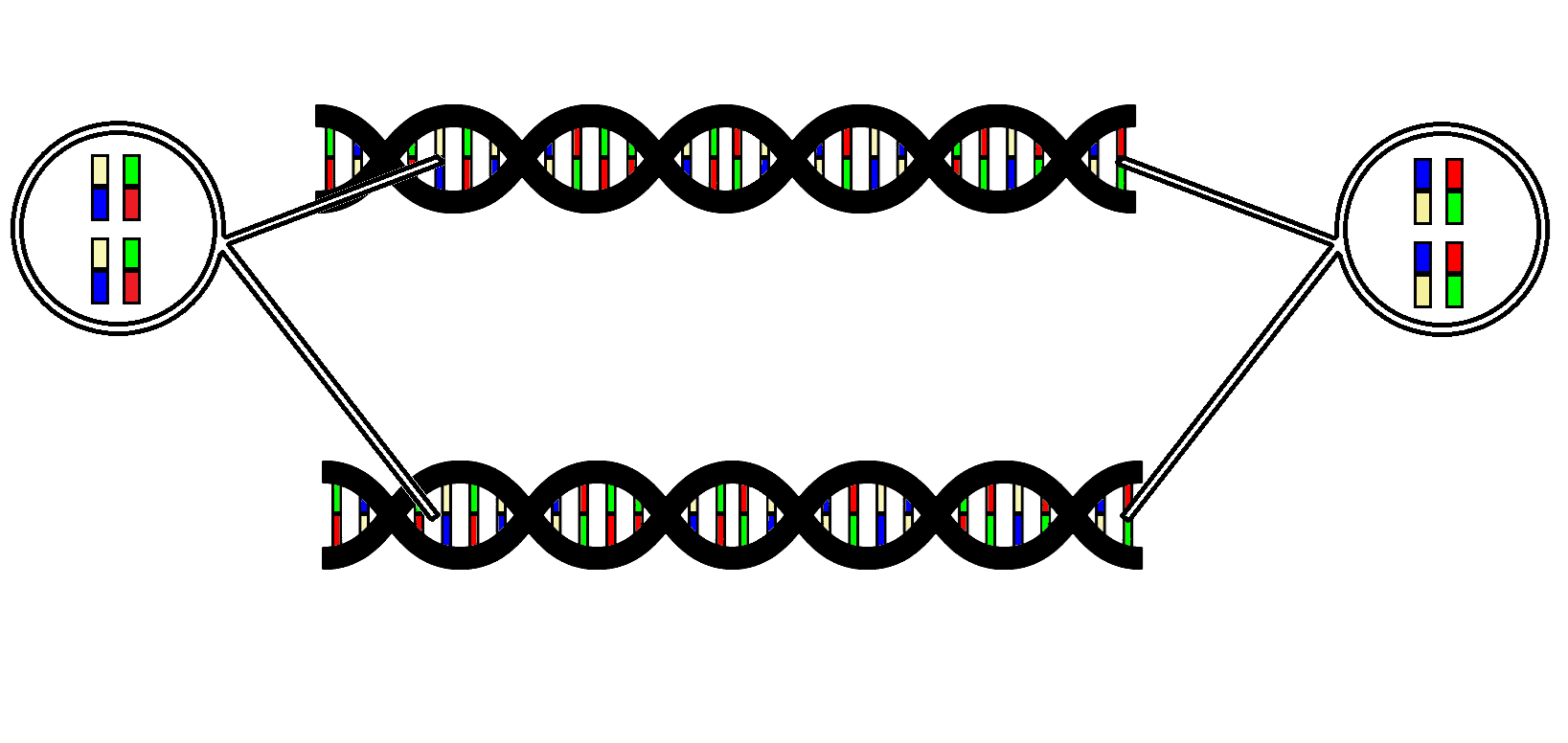
Later, another suspect is taken in for questioning. Their DNA is an exact match to the DNA found in the hair left at the crime scene. This suspect is found guilty. Notice the matching genes between the two DNA samples.
How does it work
There are two common techniques used in DNA fingerprinting that both look for differences in DNA, but in different ways:
Technique 1: Restriction Fragment Length Polymorphism (RFLP) analysis
This technique makes use of a restriction enzyme, which is used by bacteria to defend themselves against viruses. These enzymes will be released into the DNA, where they’ll split the DNA at very specific points called “restriction sites”. Across different people’s DNA, the restriction sites will be in different locations/amounts within the DNA strands.
Thus, once the DNA is split by the restriction enzyme, you’d be able to visualize the amount of DNA fragments across multiple samples, and the fragments’ sizes.
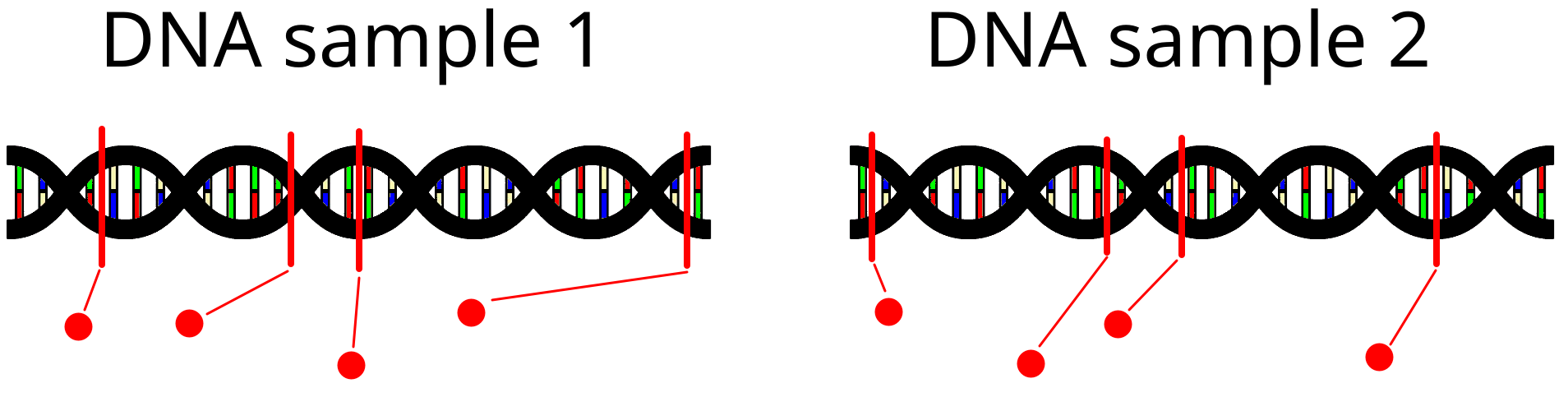
If they match, it’s highly likely DNA that belongs to the same person, and if there’s no match, the DNA samples belong to separate individuals. This method makes heavy use of non-coding DNA, which even though it doesn’t code for anything useful (giving it the now outdated name “junk DNA”), it is still useful in DNA fingerprinting.
So where do those graphs from movies come from, with two different columns of bars?
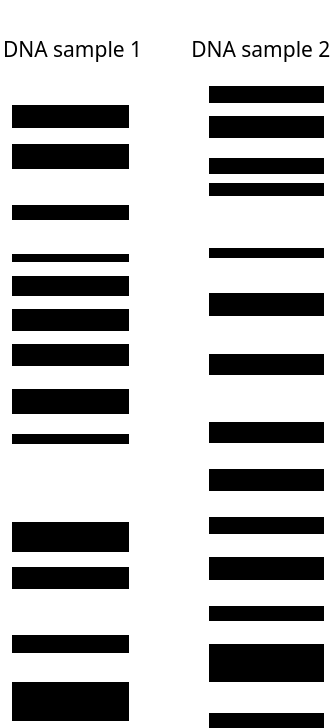
The two samples of DNA inside liquid that both look similar to each other is added to an agarose gel, alongside an electric charge, all in a process called electrophoresis.
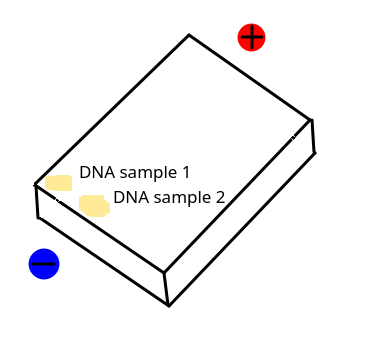
Since DNA is slightly negatively charged, the smaller fragments will move towards the positive end of the gel faster, spreading out the DNA and creating these graphs.
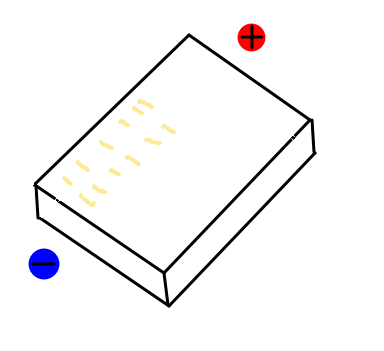
The DNA is then transferred in its spread-out but still invisible state to a nylon mesh, where it’s then made radioactive, so it can become visible when added to a photographic plate.
Overall, this method doesn’t actually look at the gene coding (ATCG) themselves, but rather different points in the DNA split by an enzyme that’s unique to each person. If the two DNA samples came from the same person, the enzyme would have split it the exact same way.
Technique 2: Short Tandem Repeats (STR) analysis
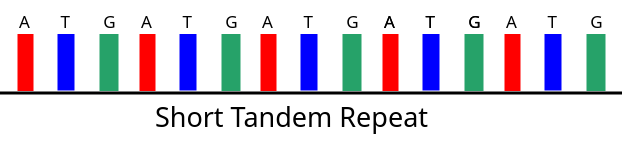
The problem with RFLP analysis is that it only works with fresh DNA, not DNA that has been left out for a long time, which would have broken itself apart already. This method directly involves looking at the genetic bases in the DNA, as in each chromosome, people have certain protein codings repeating (short tandem repeats) a different number of times. Comparing the number of STRs and how many repeats each STR has across two DNA sequences can identify if they came from the same or different individuals. This is the more commonly used method today, as it works even if the DNA is fragmented
(Learning curve, 2020)
History
- 1977: Alec Jeffreys joins the University of Leicester to study human genetics
- 1984: Jeffreys has (what the University of Leicester described as) the "eureka" moment, where he discovered DNA patterns that are unique to every individual, and coining the "DNA fingerprinting" term
- 1985: DNA fingerprinting is used outside of simply research purposes for the first time, proving that a Ghanaian child is related to his parents, preventing his deportation, as well as DNA fingerprinting being used for the first time to identify identical twins
- 1986: DNA fingerprinting is used for the first time to prove the innocence of a suspect (Richard Buckland) in a murder case of two murdered individuals.
- 1986-1987: first ever DNA mass-screening used on 5000 people to try to find the killer of two individuals (Lynda Mann and Dawn Ashworth)
-
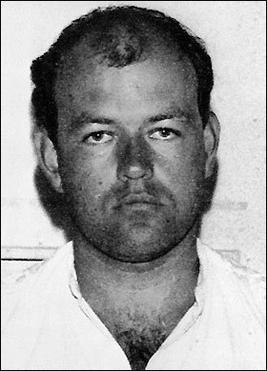
1988: First ever arrest is made with the help of DNA fingerprinting, of Colin Pitchfork for his involvement in abuse and murder, as his DNA matches the DNA found in the crime scene
(Wikipedia Contributors, 2019)
- 1991-1994: DNA fingerprinting advances with the shift from RFLP analysis to STR analysis
- 1995: The United Kingdom launches the first DNA database, including samples from crime scenes and convicted offenders
- 1998: The FBI launches CODIS (combined DNA index system) to link crimes across states
- 2001-2005: DNA fingerprinting is used to identify 9/11 and Indian Ocean Tsunami victims
- 2005-now: technology for DNA fingerprinting develops far past where it has started. Modern machines can develop a DNA profile in under 90 minutes at a local police station.
(University of Leicester, n.d.)
Upsides/downsides
Upsides
Extremely accurate
DNA fingerprinting, especially in its current state, is highly accurate. Very rarely does it fail to distinguish DNA samples from separate individuals, or wrongly distinguish DNA samples from one individual. This is an upside as accuracy doesn't need to be factored in as much in the identification process, making use cases of DNA fingerprinting faster, such as proving the innocence or guilt of people.
Exonerates the innocent
DNA fingerprinting is a powerful tool to provide undisputable evidence of the innocence of an individual, especially if no other evidence is available. The results of DNA fingerprinting are objective, and thus have led to hundreds of people avoiding unjust penalties.
Solving crimes
Opposite to the last point, DNA fingerprinting can objectively prove that DNA samples from an individual and the DNA found from the unknown criminal at a crime scene are the same, providing undisputable evidence of the guilt of a criminal.
Modern technology makes DNA fingerprinting thrive
Modern STR methods can generate accurate results from microscopic samples of DNA, even if the DNA sample is old, up to decades, which vastly expands the use cases of DNA fingerprinting, and allows for more crimes (with maybe slightly older DNA at the crimescene) to be solved.
Databases
DNA samples can be turned into profiles, allowing crimes to be linked. For example, crimes across the globe can be linked to the same person, even if the person's identity remains unknown, if the DNA at the two crimescenes match.
Deterrent from crime
Most people have at least heard of DNA fingerprinting, which may deter people from commuting crimes that they know can be easily solved with DNA fingerprinting, especially repeat offenders whose DNA data is already in databases, allowing their new crime to be easily linked to their older crimes.
Determining relationships
DNA fingerprinting can help determine family relations, including paternity and maternity relations, for legal or personal reasons, such as immigration cases.
Disaster victim identification
In large disastrous events such as 9/11 where other methods of identification are rendered useless, DNA fingerprinting can still be used as a reliable method of identifying the identity of the remains of individuals for closure.
Downsides
Risk of privacy breach
DNA contains sensitive information about health and family relations, and fingerprinting databases store this information. If this data is accessed by an unauthorized 3rd party, such as a hacker or insurer, this could breach the privacy of the individual of whom the DNA belongs to, creating a complication for them.
Human error
While the science behind DNA fingerprinting in its current state provides highly accurate results, human error can lead to issues with collecting or handling DNA samples, causing contamination, destruction, or swapping of DNA, leading to wrongfully convicted individuals, or guilty individuals found innocent.
Privacy concerns
Convicted people can have their DNA stored in databases for years, decades, or forever, raising privacy and ethical concerns.
Cost
The most accurate DNA fingerprinting, which is what should be used in all cases to ensure accurate results, requires expensive equipment, and skilled people who understand how to operate it. Low funding can thus potentially slow down results and limit access overall to the technology.
Twins
Since twins share the same DNA, as they were born from a single common fertilized egg that split into two identical eggs, it isn't possible with DNA fingerprinting alone to determine which of the two twins a specific DNA sample came from, which is one of the strongest sources of inaccuracy in DNA fingerprinting. It can also be seen as a legal loophole, as a suspect can claim a DNA match is from a twin as opposed to themselves.
Multiple samples
At a crime scene, there may be more than one DNA sample. This can be victim DNA, DNA from bystanders, or other DNA from other people at the time of the crime, such as if there was an event at the location, such as a party, where hundreds of more DNA samples could have been left. This means logic and detective work must also be applied, not just science, to determine which specific DNA sample belonged to the criminal(s). This also provides a scapegoat for the actual criminal to argue that, despite their DNA being left at the crime scene, they were only a bystander, or even a victim.
(The Ambeau Law Firm, 2025)
Should we continue?
Overall, I think the positives heavily outweigh the negatives of DNA fingerprinting, and that society should continue using it, while ensuring the prevention of its abuse and mishandling. This is because DNA fingerprinting is a strong force in the world of justice, as it commonly serves as the best or only scientific standard to identify individuals related to a crime. It's also a strong process in identifying disaster victims or family relations. Society should, however, still ensure that DNA fingerprinting is used responsibly to help mitigate its downsides, by ensuring privacy is respected, and ensuring that human error is reduced to as low as it can be with properly trained staff handling samples.
References
- DNA FINGERPRINTING. (n.d.). DNA FINGERPRINTING. https://allaboutdnafingerprinting.weebly.com/
- Wikipedia Contributors. (2019, May 6). DNA profiling. Wikipedia; Wikimedia Foundation. https://en.wikipedia.org/wiki/DNA_profiling
- Chadwick, L. (2019). DNA Fingerprinting. Genome.gov; National Human Genome Research Institute. https://www.genome.gov/genetics-glossary/DNA-Fingerprinting
- Learning Curve (2020, October 2). How does DNA fingerprinting work? Www.youtube.com. https://www.youtube.com/watch?v=ijps41MkSzw
- Chronology of DNA fingerprinting at Leicester | DNA fingerprinting | University of Leicester. (n.d.). Le.ac.uk. https://le.ac.uk/dna-fingerprinting/chronology
- University of Leicester. (n.d.). The History of Genetic Fingerprinting | DNA Fingerprinting | University of Leicester. Le.ac.uk. https://le.ac.uk/dna-fingerprinting/history
- Wikipedia Contributors. (2019, April 7). Colin Pitchfork. Wikipedia; Wikimedia Foundation. https://en.wikipedia.org/wiki/Colin_Pitchfork
- The Ambeau Law Firm. (2025, May 19). Ambeaulaw.com. https://www.ambeaulaw.com/news/pros-and-cons-of-dna-evidence/
- Mouse cursor: Wheeler, O. uploader was R. (2007, February 4). Deutsch: Strukturmodell einer DNA-Helix in B-Konformation (Animation). Die Stickstoff (blau) enthaltenden Nukleinbasen liegen waagrecht zwischen zwei Rückgratsträngen, welche sehr reich an Sauerstoff (rot) sind. Kohlenstoffatome sind grün dargestellt. Wasserstoff: weiß, Phosphor: orange. Wikimedia Commons. https://commons.wikimedia.org/wiki/File:DNA_orbit_animated.gif